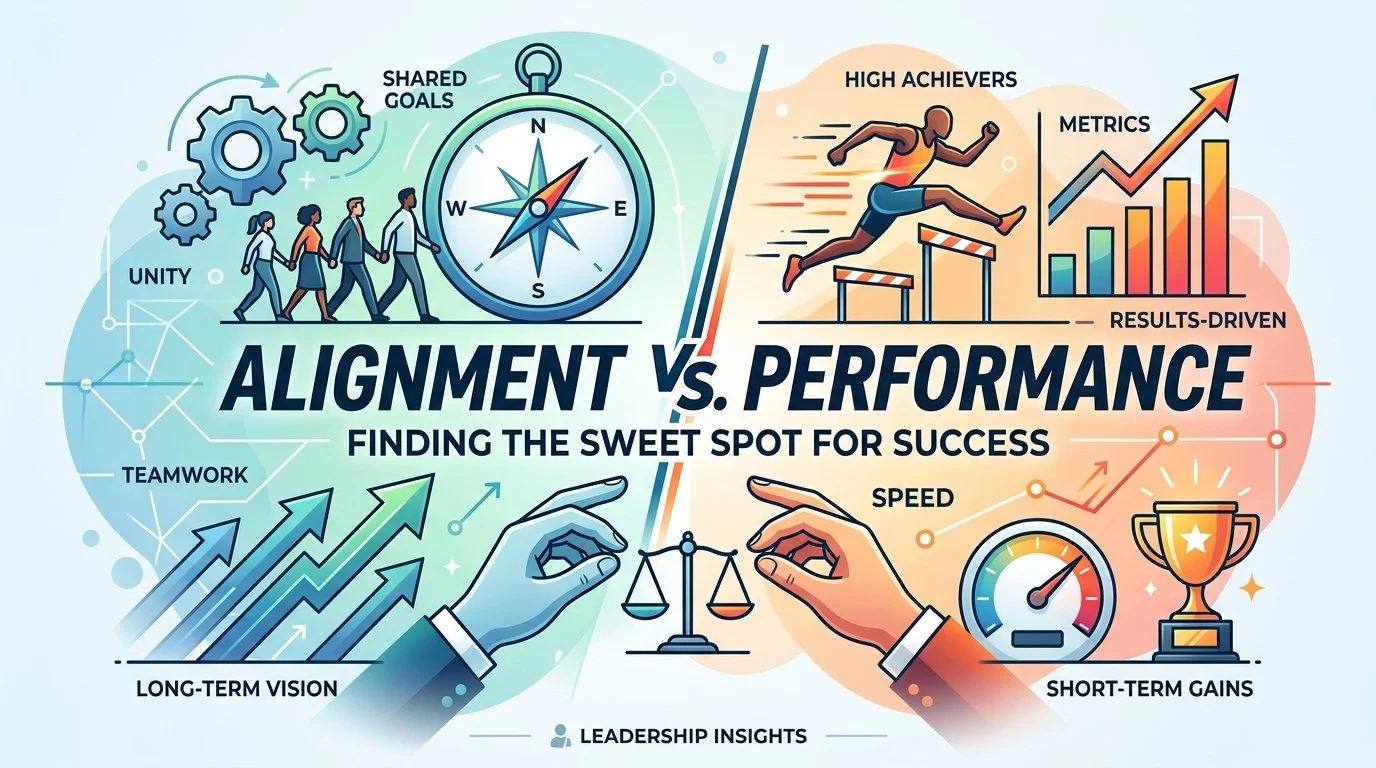
Alignment vs Performance
Many environments reward performance over alignment. This essay explores how reactive decision-making forms and how the Neuro-Alignment Method restores clarity and agency.
Why modern environments reward reaction rather than clarity
In many professional and social environments, success is measured by visible output: results, productivity, speed, and recognition. While these metrics can be useful for evaluating work, they often begin to influence something deeper—the way individuals understand themselves. Over time, people learn to organize their behavior around performance rather than alignment.
Performance asks: What will produce approval, recognition, or results?
Alignment asks: What action is consistent with identity, clarity, and integrity?
The difference between the two may appear subtle at first, but it shapes how decisions are made, how pressure is experienced, and how individuals relate to their own sense of worth.
The Culture of Reaction
Performance-based environments tend to reward speed and responsiveness. Individuals are expected to respond quickly to changing expectations, shifting goals, and external evaluation. While responsiveness can be valuable, it often encourages a pattern of reactive decision-making. Instead of pausing to consider whether an action aligns with deeper values or identity, individuals begin to prioritize immediate outcomes. Decisions become shaped by urgency, comparison, and external pressure. Over time, this pattern reinforces a subtle internal narrative: Your value depends on how well you respond to external demands.
The result is not simply increased productivity. It is the gradual replacement of internal clarity with external pressure.
Alignment Requires a Different Orientation
Alignment does not reject performance or responsibility. Work, excellence, and contribution remain important. What alignment changes is the source of action. When individuals operate from alignment, decisions begin with internal clarity rather than external pressure. Identity becomes the anchor that shapes behavior, rather than the byproduct of evaluation.
Aligned action tends to emerge from three internal conditions:
Clarity — understanding who one is becoming
Awareness — recognizing the narratives shaping decisions
Agency — choosing actions intentionally rather than reactively
When these conditions are present, performance becomes a natural outcome of alignment, rather than the primary goal.
Why Internal Narratives Matter
Much of the tension between alignment and performance occurs internally. Individuals carry narratives about responsibility, approval, success, and failure that quietly shape how they interpret situations. These narratives often form through years of cultural conditioning, professional expectations, or personal experience. Without examining these narratives, people may unknowingly continue operating from patterns that reinforce reaction rather than clarity.
This is why Insight4Alignment introduces the Neuro-Alignment Method.
The Neuro-Alignment Method helps individuals recognize internal narratives, interrupt reactive thinking patterns, and rebuild the relationship between identity, thought, and action.
Moving from Reaction to Conscious Action
Alignment begins when individuals learn to pause between stimulus and response. Instead of reacting automatically to external expectations, they begin to examine the internal narratives shaping their decisions. This shift does not reduce responsibility or performance. In many cases, it strengthens both. Individuals who operate from alignment tend to make decisions with greater consistency, integrity, and long-term clarity. The work is not about becoming less engaged with life—it is about becoming more intentional within it.
Practicing Alignment
Understanding the difference between alignment and performance is the first step. The next step is learning how to recognize and reshape the narratives that drive reactive thinking. The 21-Day Self-Talk Reset, part of the Neuro-Alignment Method, introduces practical exercises that help individuals examine internal narratives and rebuild the connection between identity, thought, and action. Through small daily practices, participants begin to replace reaction with awareness and external pressure with intentional decision-making.
Begin the Practice
If you would like to explore the practical side of this work, the 21-Day Self-Talk Reset introduces the foundations of the Neuro-Alignment Method.

The Architecture of Identity
Identity shapes how we interpret experience and make decisions. This essay explores identity architecture and how alignment begins with understanding who we are becoming.
Why alignment begins with understanding who we are becoming
Every decision a person makes emerges from some understanding of who they believe themselves to be. This understanding is rarely examined directly. It forms gradually through experience, relationships, cultural expectations, and the narratives individuals internalize about success, responsibility, and belonging. Over time, these influences shape what can be described as the architecture of identity.
Identity architecture refers to the internal structure that determines how individuals interpret situations, make decisions, and understand their place in the world. It is the lens through which thoughts form, behavior emerges, and meaning is assigned to experience. When this architecture is stable and intentional, individuals tend to move through life with clarity and direction. When it is fragmented or externally defined, decision-making often becomes reactive and inconsistent.
Alignment begins by understanding this structure.
Identity Is Not Static
Many people assume identity is something fixed—an unchanging description of personality or background. In reality, identity is dynamic.
It evolves through the interaction of several factors:
• Internal narratives about who we are
• Roles we occupy within families, organizations, and communities
• Cultural expectations and social feedback
• Personal values and aspirations
These elements continuously influence one another, shaping how individuals interpret their experiences. When identity is shaped primarily by external expectations, individuals may find themselves making decisions that reflect pressure rather than clarity. When identity is shaped intentionally, individuals begin making decisions from a clearer sense of who they are becoming.
The Relationship Between Identity and Thought
Identity does not operate independently from thought. The narratives individuals carry about themselves influence the way they interpret events, challenges, and opportunities. For example, a person who internally identifies as someone who must constantly prove their value may interpret neutral situations as evaluations of their worth. This can lead to patterns of overworking, perfectionism, or fear of failure. Another individual whose identity is grounded in dignity and purpose may interpret the same situation as an opportunity to contribute or learn. In both cases, the external situation may be identical. What differs is the identity architecture through which the situation is interpreted.
Rebuilding Identity Architecture
When individuals begin exploring alignment, they often focus first on behavior or productivity. While these areas matter, they rarely address the deeper structures that shape action. Insight4Alignment approaches this work differently. Instead of beginning with performance or output, the work begins by examining the internal architecture shaping decisions.
This process involves:
• Recognizing the narratives that influence identity
• Examining the roles individuals have internalized
• Clarifying personal values and direction
• Reconnecting identity with dignity rather than performance
When individuals rebuild identity architecture intentionally, behavior begins to change naturally. Actions become less reactive and more consistent with long-term direction.
Identity and Alignment
Alignment emerges when identity, thought, and action move in the same direction.
When identity is externally defined or fragmented, individuals may feel constant tension between what they do and who they feel they are supposed to be. When identity becomes intentional and grounded, decisions begin to feel less conflicted. Effort becomes more focused, and the relationship between responsibility and meaning becomes clearer. In this way, identity architecture forms the starting point of alignment.
Practicing Identity Alignment
Understanding identity conceptually is valuable, but meaningful change requires reflection and practice.
The 30-Day Identity Alignment program introduces structured exercises designed to help individuals examine the narratives shaping identity and begin rebuilding their internal architecture intentionally. Through guided reflection and practical exercises, participants learn to reconnect their decisions and actions with the person they are becoming.
Begin the Practice
If you would like to explore this work more deeply, the 30-Day Identity Alignment program offers a structured pathway for examining and rebuilding identity architecture.