
When the Sacred Becomes a Metric
alignment-architecture-performance-culture.jpg
Alignment Architecture concept illustrating the shift from performance-driven identity to aligned living
In many modern environments—professional, cultural, and even personal—worth is increasingly measured through performance. Productivity dashboards, quarterly targets, social metrics, and constant evaluation quietly reshape how individuals understand themselves. Over time, these systems begin to influence something deeper than behavior: they begin to shape identity.
What begins as a method for tracking results slowly becomes a lens for measuring human value. This is the moment when the sacred becomes a metric.
The Quiet Conversion of Worth
Performance measurement is not inherently harmful. Organizations need feedback loops, and individuals benefit from clear goals. The problem emerges when measurement migrates from tools for evaluating work to standards for evaluating people. When that shift occurs, individuals begin to internalize a subtle message: Your worth must be proven.
In this environment, identity becomes tied to output, approval, and results. Effort replaces presence, and performance replaces clarity. Over time, people no longer simply do work—they begin to become their work.
The Psychological Cost of Metric-Based Identity
When identity becomes tied to performance metrics, several patterns begin to appear. Individuals may experience:
• Chronic self-evaluation
• Fear of failure or exposure
• Difficulty separating work from identity
• Exhaustion from constant proving
Rather than acting from internal clarity, decisions begin to emerge from pressure, comparison, and reaction. The result is not simply stress—it is a gradual distortion of the relationship between identity, thought, and action.
Rebuilding the Architecture of Alignment
Insight4Alignment approaches this problem from a structural perspective. Instead of focusing only on productivity or mindset, the work examines the internal architecture that shapes behavior.
Alignment emerges when four core elements are restored:
Identity — understanding who we are becoming
Thought — recognizing the narratives shaping decisions
Dignity — grounding worth beyond performance
Trust — building environments that support integrity
When these elements function together, individuals no longer operate primarily from external pressure. Decisions begin to arise from clarity, rather than reaction.
This is the foundation of Alignment Architecture.
From Performance to Presence
The solution to performance culture is not disengagement or apathy. Work and excellence still matter. What changes is the source of action. When individuals reconnect with dignity and internal clarity, effort no longer emerges from fear of failure or constant proving. Instead, it emerges from presence, responsibility, and conscious choice. The work remains meaningful—but the individual is no longer consumed by the need to justify their existence through performance.
The Beginning of the Alignment Journey
These ideas form the foundation of the Insight4Alignment framework and are explored in depth in the book:
When the Sacred Becomes a Metric
The book examines how performance culture reshapes identity and offers a framework for rebuilding the internal structures that support clarity, dignity, and aligned living. If the article resonated with you, the book expands these ideas and introduces the broader architecture behind the work.
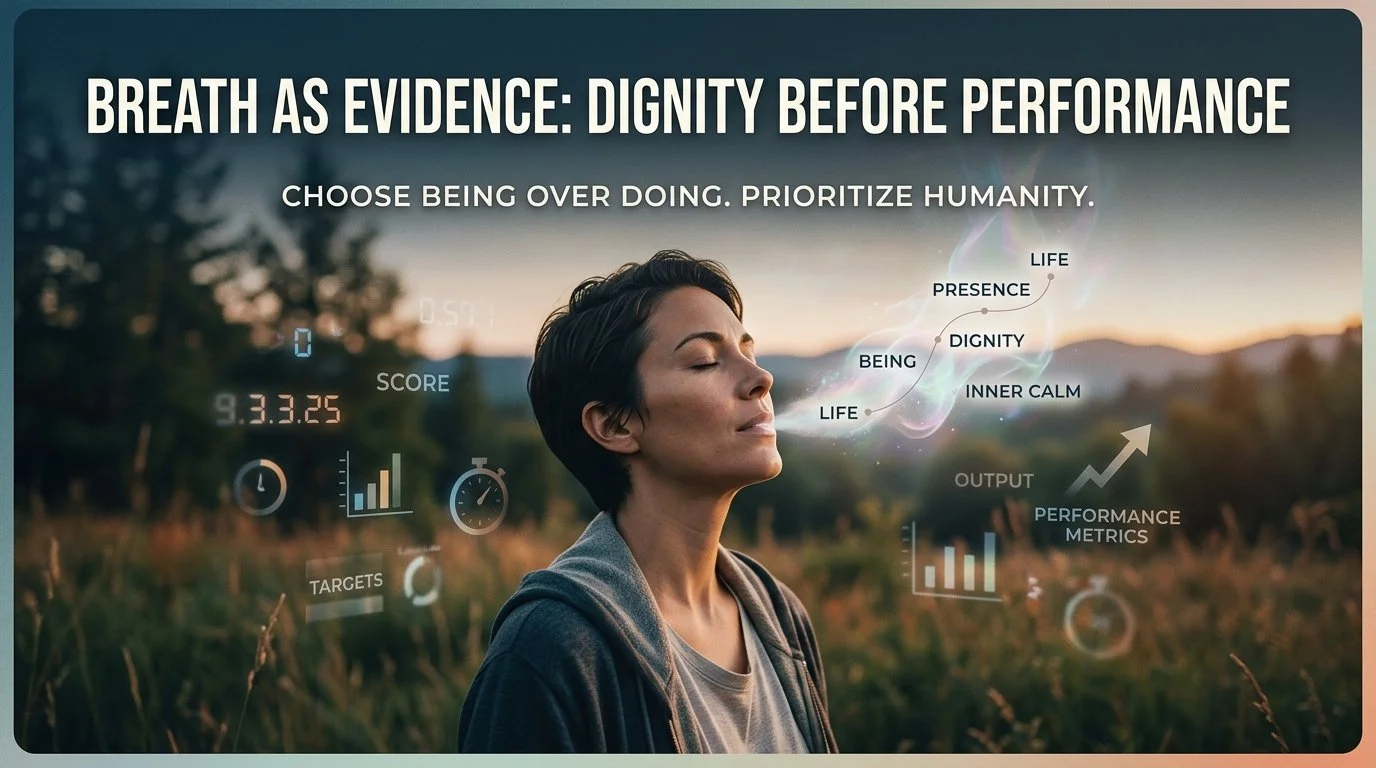
Breath as Evidence: Dignity Before Performance
Breath is the simplest evidence of belonging. This essay explores how restoring dignity before performance helps rebuild alignment in identity, thought, and action.
Restoring dignity before performance
Many people carry a quiet assumption about their worth: it must be earned. This assumption often forms gradually through cultural expectations, educational environments, professional systems, and personal experiences. Individuals learn—sometimes subtly and sometimes explicitly—that value must be proven through performance, productivity, or approval.
Over time, this belief becomes internalized. Instead of experiencing life as something to inhabit, individuals begin to experience life as something to justify. The result is a constant pressure to demonstrate competence, usefulness, or success in order to feel legitimate.
Insight4Alignment approaches this problem from a different starting point. Before performance, before achievement, before recognition, there is something far more fundamental. There is breath.
Breath as the First Evidence of Worth
Breath is the most basic sign of life. It requires no qualification, no certification, and no external validation. If a person is breathing, they are alive. If they are alive, their existence already carries inherent significance. This simple recognition challenges one of the most deeply embedded narratives in performance culture: that worth must be proven. Breath offers a different perspective. It reminds us that life itself precedes achievement. In this sense, breath becomes evidence—not of accomplishment, but of belonging.
When Worth Becomes Conditional
Performance-based environments often transform value into something conditional. Worth becomes tied to:
• Productivity
• Success
• Approval
• Comparison
• Visible outcomes
Under these conditions, individuals may begin to feel that rest, reflection, or uncertainty represent failure rather than natural parts of being human. The more someone internalizes this belief, the more difficult it becomes to separate identity from performance. Eventually, people may feel that they are only as valuable as their most recent success. This is one of the quiet costs of performance culture.
Restoring the Foundation of Dignity
Dignity is not something that emerges after success. It is the foundation from which healthy action becomes possible.
When individuals reconnect with dignity, effort begins to change in quality. Instead of acting primarily from fear of failure or the need for approval, individuals begin acting from a sense of responsibility, contribution, and clarity. Work still matters. Excellence still matters. What changes is the source of motivation. Actions begin to emerge from presence rather than pressure. This shift allows individuals to participate fully in their work and relationships without constantly measuring their value against external standards.
The Practice of Breath as Evidence
Understanding dignity intellectually is one step. Learning to experience it is another.
The Breath as Evidence practice invites individuals to pause long enough to recognize the simple reality that life itself is not something that must be justified. Through reflection, awareness exercises, and small daily practices, participants learn to interrupt the internal narrative that says worth must always be proven. The work is not about rejecting effort or ambition. Instead, it helps individuals rebuild the internal foundation from which effort can emerge in a healthier way. From that place, action becomes more intentional, relationships become more grounded, and the pressure to constantly prove one's existence begins to soften.
Living from Dignity Rather Than Proof
When individuals begin operating from dignity rather than proof, a quiet but profound shift occurs. They still contribute, still pursue meaningful goals, and still engage deeply with life. But the relationship between identity and performance changes. Work becomes an expression of life rather than a justification for it.
This is the beginning of alignment.
Begin the Practice
If you would like to explore this work in a structured way, the 21-Day Agency Restoration program introduces the core practices behind Breath as Evidence. Through guided exercises and reflection, participants begin rebuilding their relationship with dignity, agency, and intentional living.